Is It Harder to Get an SBA Loan in 2026?
- Ten-year SBA 7(a) approvals fell 28.8% in the first half of 2026 compared with the same period in 2025.
- Total gross approved dollars declined by more than $2.05 billion while the average approved amount increased.
- Lower approval volume does not by itself establish a lower approval rate because application and decline totals are not included in the dataset.
The number of ten-year SBA 7(a) loan approvals fell sharply during the first half of 2026 compared with the same six months in 2025. From January 1 through June 30, the number of approvals declined by 28.8%, while total gross approved dollars fell by 20.0%.
That is a meaningful slowdown. It does not, however, answer every part of the question borrowers are asking. Approval volume tells us how many loans were approved and how much was approved. It does not tell us how many businesses applied, how many were declined, or the program's overall approval rate.
The clearest conclusion is this: there were materially fewer ten-year SBA 7(a) approvals in the first half of 2026 than in the same period of 2025.
SBA 7(a) Approval Volume: First Half of 2026 vs. 2025
Our analysis of 120-month SBA 7(a) approvals found:
- Number of approvals: down 28.8%
- Total gross approved dollars: down 20.0%
- SBA-guaranteed dollars: down 20.8%
- Average approved amount: up 12.3%
In practical terms, lenders recorded 8,801 fewer ten-year 7(a) approvals in the first half of 2026. The total gross amount approved declined by more than $2.05 billion. The average approval was about $41,000 larger, which means the decline was concentrated more heavily in the number of loans than in the average size of each approval.
What the SBA Data Measures
This comparison uses the SBA's official 7(a) loan-level data and filters for approvals with a term of exactly 120 months. The periods are calendar Q1 and Q2-January 1 through June 30-not the SBA's federal fiscal quarters.
The figures use the dataset's GrossApproval and SBAGuaranteedApproval fields. They should therefore be described as approved amounts, not necessarily dollars already disbursed to borrowers. The comparison also covers one specific segment of the 7(a) program: ten-year approvals. It should not be read as a measure of every SBA 7(a) product or term.
Does Lower Approval Volume Mean SBA Loans Are Harder to Get?
The data supports the conclusion that ten-year 7(a) approval volume was lower. It does not, by itself, prove that each individual applicant had lower odds of approval.
To calculate an approval rate, we would also need reliable data on the total number of applications and declines during each period. The SBA loan-level approval dataset does not provide that denominator.
Still, the decline is consistent with what many applicants and lenders have experienced: a changing policy environment, more lender-specific underwriting, and closer attention to eligibility and repayment ability.
Several policy changes shaped the market entering and during 2026:
- SBA underwriting standards tightened under SOP 50 10 8 in 2025.
- Merchant cash advances and factoring agreements became ineligible for direct SBA refinancing in 2025.
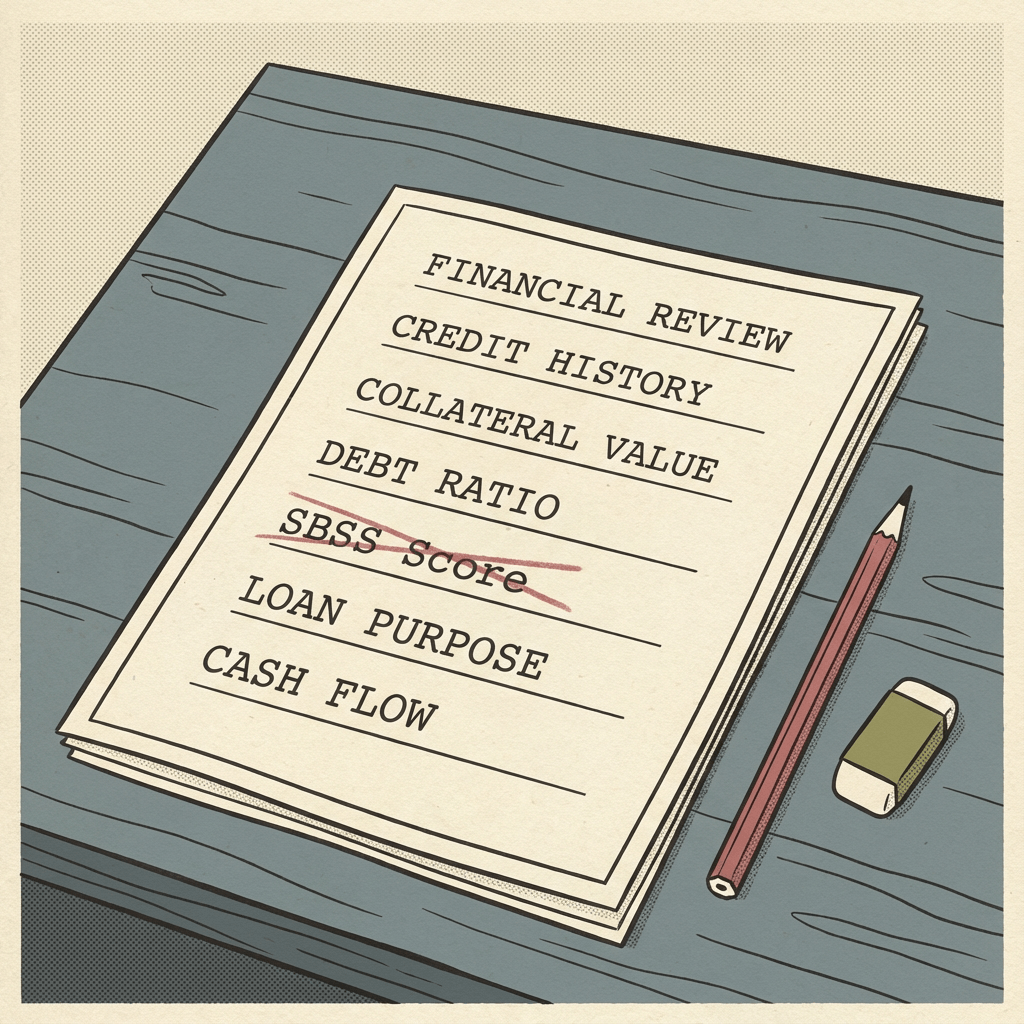
- The SBA sunset its use of the SBSS benchmark for 7(a) Small Loans in 2026, leaving lenders to rely more heavily on their own credit analysis and underwriting models.
- Revised citizenship and residency requirements for 7(a) and 504 loans took effect in March 2026.
These changes may help explain part of the market shift, but approval-volume data alone cannot isolate how much of the decline was caused by any single rule, lender behavior, borrower demand, or broader economic conditions.
What This Means for SBA Borrowers in 2026
Banks are still approving SBA loans. The increase in average approved amount also shows that larger ten-year approvals continued to move through the program even as the overall number of approvals fell.
For borrowers, the practical lesson is to prepare for a more lender-specific review. Since the SBA no longer uses SBSS as the universal screening benchmark for 7(a) Small Loans, one lender's credit model and underwriting standards may differ from another's. An SBA decline from one bank does not necessarily mean every SBA lender will reach the same decision.
Repayment ability remains central. Before applying, business owners should understand their debt service coverage ratio, or DSCR. Lenders generally evaluate whether adjusted business cash flow can cover current business debts and the proposed SBA loan payment.
Borrowers can strengthen an application by:
- Improving operating margins and documenting stable revenue
- Reducing expensive short-term business debt where possible
- Preparing a complete business debt schedule
- Reviewing business and personal credit before submission
- Explaining unusual expenses, revenue changes, and legitimate cash-flow addbacks
- Matching the application to a lender whose credit policy fits the business
For a deeper explanation, read FastWaySBA's guide to how DSCR is actually calculated.
Talk With FastWaySBA About Your Approval Options
Lower approval volume does not mean SBA financing is unavailable. It means preparation and lender placement matter more.
To review your business's financing needs and likely SBA options, schedule a call with a FastWaySBA loan originator or start an application.
Data source: U.S. Small Business Administration, 7(a) and 504 FOIA dataset

.svg)

.svg)




.png)